
Explore 12 Historic Sites In Little Havana
- February 20, 2026
In the late 19th and early 20th centuries, Little Havana was a modest, working-class neighborhood. Many of its small bungalows, modest apartment buildings, corner stores, churches and schools remain today. What makes the area unique is its role since the 1960s as the cultural capital of people from Cuba – the island nation less than 300 miles away.
All these characteristics led the National Trust for Historic Preservation to name the entire Little Havana neighborhood a “National Treasure” in 2017. Here are some of its more noteworthy places.

Calle Ocho
Southwest Eighth Street, Between 12th and 27th avenues
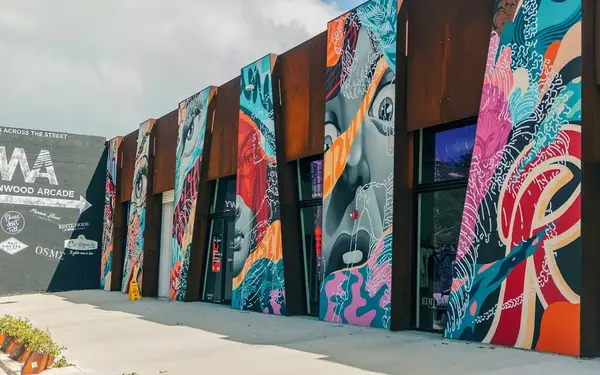
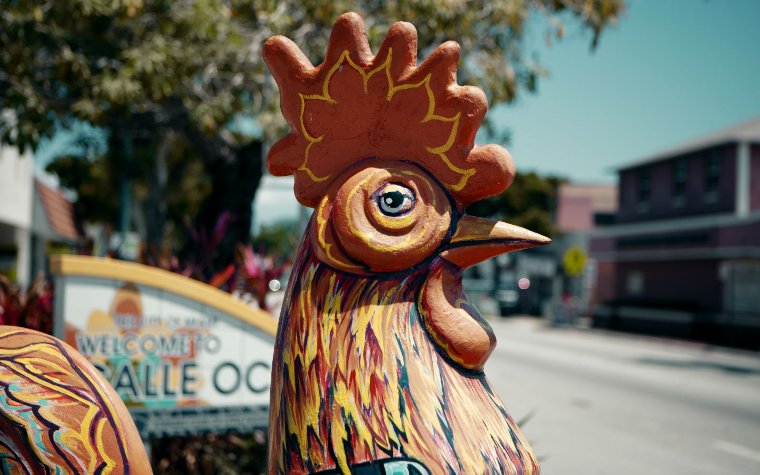
Calle Ocho in Little Havana is the heart of the Cuban-American community. Strolling down this avenue today, visitors can see people enjoying sidewalk cafes, plus colorful, wall-sized murals, art galleries and stores selling gifts, souvenirs and cigars (a few even demonstrating how they hand-roll fine smokes).
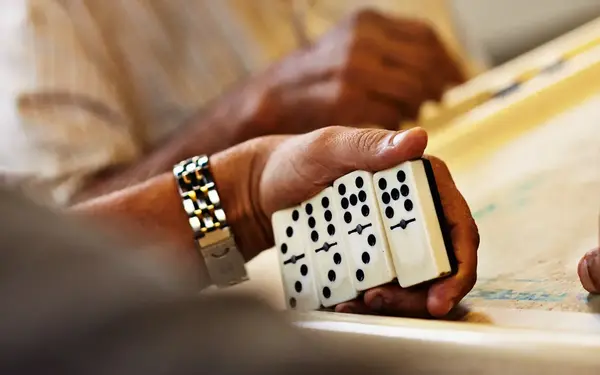
Great Latin music pulses from restaurants, bars and stores. In a shady park, men add percussion, slapping down tiles in spirited games of dominoes as they argue good-naturedly – in Spanish, of course.

CubaOcho Museum and Performing Arts Center
1465 SW Eighth St., Suite 106, Miami, FL 33135
CubaOcho is a bar and restaurant with nightly live music, plus a museum and art gallery with one of the largest privately owned Cuban collections in the world. It was founded in 2007 by Cuban historian Roberto Ramos, whose art dates from 1800 to 1958. Visitors can explore major works, including the large oil-on-canvas 1937 painting “La Rumba” by Antonio Sánchez Araujo.
Ramos created CubaOcho as a museum, plus a living cultural space for all the arts: painting, sculpture, music, dance, theater, literature and film.
The Tower Theater
1508 SW Eighth St., Miami, FL 33135
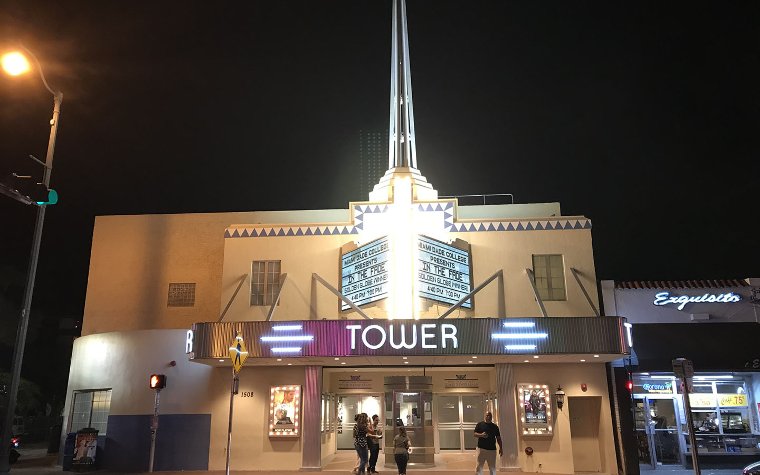
This historic theater was built in 1926 and transformed into an Art Deco movie palace by architect Robert Law Weed in 1931 for the Coral Gables-based Wometco theater chain. It was a popular neighborhood attraction that featured Saturday-morning matinees and special events.
The theater’s 40-foot-tall, shiny steel spire greeted Cuban refugees when they began moving to Little Havana in 1959. In early 1960, The Tower Theater was the first in Miami to add Spanish subtitles to movies.
Today, it has been beautifully restored, and is now owned and operated primarily as a performance space by the City of Miami.

Domino Park (Máximo Gomez Park)
Southwest Eighth Street and 15th Avenue
This tree- and pavilion-shaded park is famous for the fierce domino games played there daily by members of the Maximo Gόmez Domino Club. Domino Park has walkways with domino-themed tiles and benches for spectators.
The park’s official name honors the Dominican-born general, Máximo Gómez, who led the Cuban Liberation Army during the wars of independence against Spain.
Little Havana’s Walk of Fame
Southwest Eighth Street Between 12th and 17th avenues
The sidewalk in this segment of Calle Ocho has star-shaped plaques to honor Hispanic artists and celebrities, such as famed Cuban-American musicians Gloria Estefan and Celia Cruz, Spain’s Julio Iglesias, Venezuelan-American actress and singer Maria Conchita Alonso and Dominican baseball great Sammy Sosa.
Cuban Memorial Boulevard and Bay of Pigs Monument
Southwest 13th Avenue Between Eighth and 12th streets
Cuban Memorial Plaza stretches along a wide, shaded median on this four-block boulevard just off Calle Ocho and features several monuments dedicated to Cuban freedom fighters. One monument is the Eternal Torch of Brigade 2506, a memorial to the soldiers who fought in the 1961 Bay of Pigs Invasion, a U.S.-government-supported attempt to overthrow Castro. It’s a marble structure with the brigade's insignia, artillery shells and engraved names of those who died in the invasion, topped by the eternal flame.
The park also includes a bronze statue of Nestor “Tony” Izquierdo, who took part in the invasion; a bronze map of Cuba; a statue of the Virgin Mary; a bronze bust of Gen. Antonio Maceo, an Afro-Cuban freedom fighter who served in the 1895 to 1898 war to wrest control of Cuba from Spain; and Plaza de Los Periodistas Cubanos, dedicated to Cuban journalists who spoke out against the Castro regime.
Also in the park is a large Ceiba tree, revered in the Santería religion, where followers leave candles and offerings.
Bay of Pigs Brigade 2506 Museum
1338 SW Eighth St., Miami, FL 33135
As of late 2025, this storefront was the temporary home of the Bay of Pigs Brigade 2506 Museum while the Brigade 2506 Veterans Association builds a new location. The museum preserves the stories of the Cuban soldiers of the Assault Brigade 2506 that invaded Cuba with others at the Bay of Pigs on April 17, 1961. It displays photographs, flags, uniforms and other items from the assault, which failed after three days when the U.S. government withdrew its formerly strong support.
Saints Peter and Paul Orthodox Church Miami
1411 SW 11th St., Miami, FL 33135
The church building was constructed in 1927 as a home for John Bernard Reilly, the first mayor of Miami (1896 to 1900) and his wife, Marie. Noted Miami architect Martin L. Hampton designed the 4,800-square-foot, masonry-vernacular structure with neoclassical elements, such as the columns of the entrance portico and acanthus leaf decorations on the pilaster above the portico and above the arched windows. The Reillys’ daughter and her family lived there until selling it in 1954 to Saints Peter and Paul Orthodox Church.
The first floor of the building was converted into a house of worship, and the second floor became the rectory for the church’s priest. The church still holds services several times a week.
Plaza De La Cubanidad (Plaza of Cuban Patriots)
West Flagler Street and Southwest 17th Avenue
Plaza De La Cubanidad is about eight blocks north of Calle Ocho, this small fountain plaza reopened in 2025 after renovations. It honors Cuban patriots and “los balseros,” people who escaped or died trying to escape to Florida on rafts.
J.W. Warner House
111 SW Fifth Ave., Miami, FL 33130
In 1912, James W. Warner built this beautiful, antebellum-style home that was one of the finest in the Riverside neighborhood. Warner was from Georgia and had prominent Miami architect George L. Pfeiffer design the home in the southern neoclassical style of grand homes there. After moving to Miami, Warner's wife Susan began the city’s first florist business, the Miami Floral Co., which operated out of the ground floor of the home for 66 years. The house had 22 bedrooms and two indoor bathrooms, while most homes in the area still had outhouses. It also was one of the first there to have electricity.
In 2009, the Miami Hispanic Ballet bought it with help of a Miami-Dade County grant. It was added to the U.S. National Register of Historic Places in 1983. Today, it houses the Miami Hispanic Cultural Arts Center.
Miami River Inn By Renzzi (Formerly Selina Miami River)
437 SW Second St., Miami, FL 33130
This property up the street from the riverfront and the Miami River Greenway consists of a stucco building and frame-vernacular buildings and cottages dating to 1908. Its hostelry license is the oldest in Miami.
Completely renovated and rebranded in 2020 as Selina Miami River, it’s now known as the Miami River Inn By Renzzi. It features an outdoor swimming pool, a bar and a tropical garden.
Jose Marti Park
351 SW Fourth St., Miami, FL 33130
On the Miami River near the Miami River Inn, Jose Marti Park is a beautiful park and playground that features a bust of Cuba’s most prominent writer and hero, Martí (1853–1895). He was a prolific writer of newspaper articles, essays, poetry, novels and children’s books.
He was one of the great turn-of-the-century, Latin-American intellectuals, and a leader in the struggle for Cuba’s independence from Spain. He was a lifelong advocate for democracy and freedom, including the end of slavery.
Partners Mentioned In This Article
Miami's Architectural Guide
Opa-locka: The History Of One Of America's Most Unique Cities
Explore Arts & Culture In Little Havana
A Look Back At Miami's African American And Caribbean Heritage
History of the Miccosukee Tribe
Miami Beach History Through Vintage Postcards
Miami's Hispanic Heritage