

15 Historic Sites In & Around Liberty City
- August 26, 2024
The first large migration of Black people to Liberty City began in 1937, when many families moved to the Liberty Square Housing Project, the second federal housing project built in the U.S. and the first built for Black Americans. The second major migration came in the late 1950s and early 1960s as a result of the Black displacement caused by the expressway construction that devastated Historic Overtown. Today, Liberty City has evolved into a vital neighborhood that’s rich in history. These 15 sites in and around Liberty City honor and reflect that history.
Martin Luther King Boulevard
NW 62nd Street from Biscayne Boulevard to Hialeah
Named in honor of Dr. Martin Luther King Jr., this largely commercial street runs east-west through several communities, including Little Haiti, Liberty City, Brownsville and Hialeah. In Brownsville, a statue of Dr. King is in Martin Luther King Jr. Memorial Park.
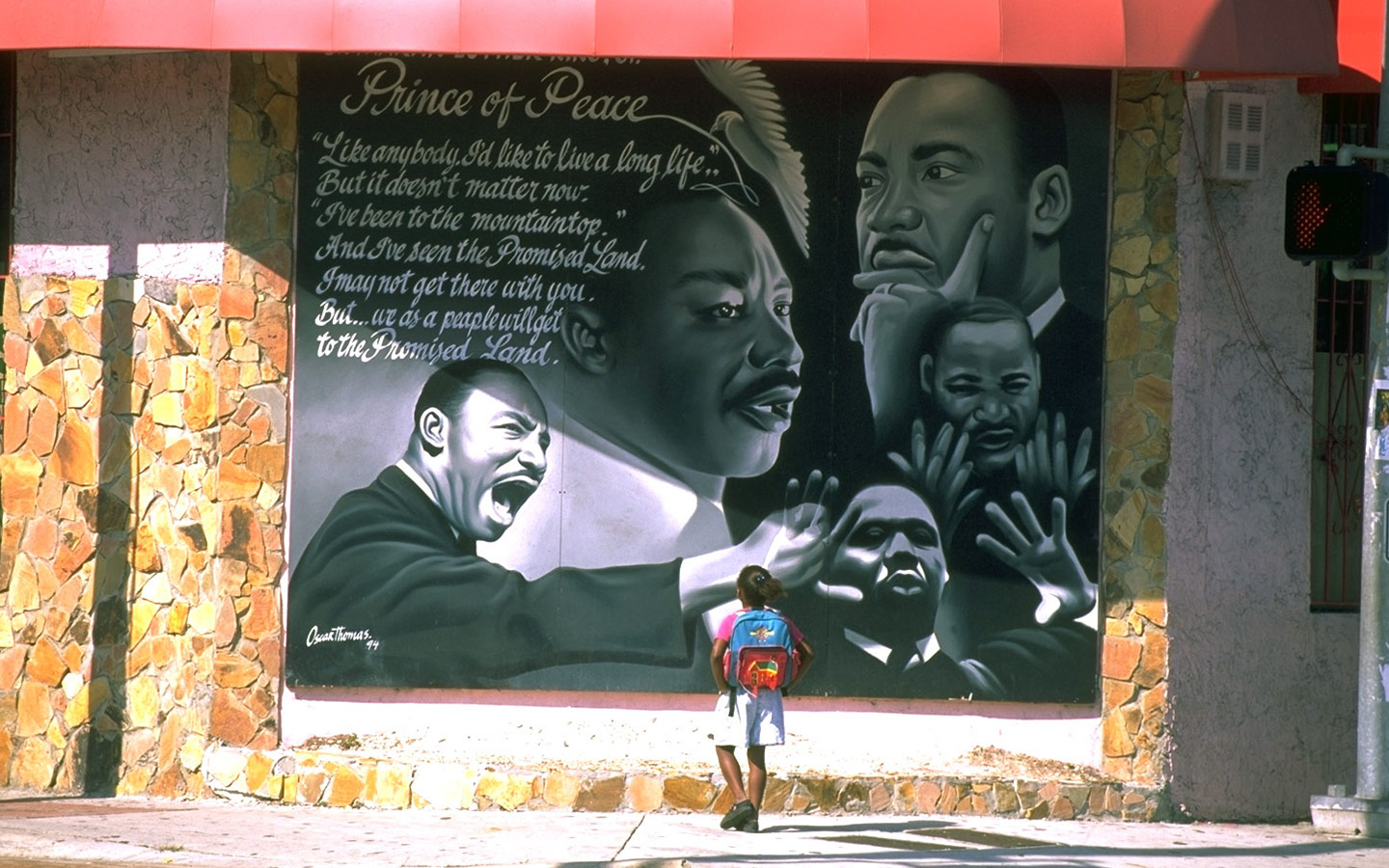
62nd Street Mural
Northwest 62nd Street and 7th Avenue
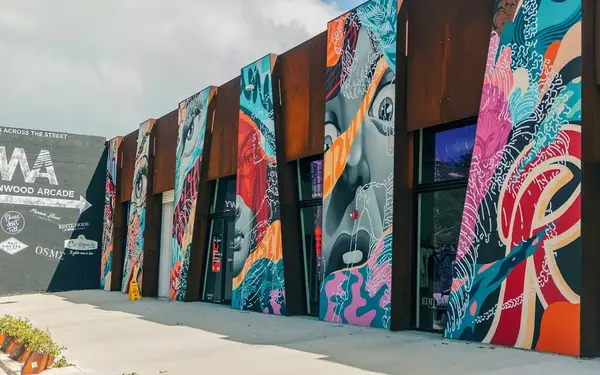
Painted by the late artist Oscar Thomas, this colorful mural depicting the legacy of Dr. Martin Luther King Jr. is one of several in the area designed to represent the pride and heritage of the Liberty City community.
The Wall
Northwest 12th Avenue from 62nd to 71st streets
Liberty City’s Wall was established in the 1930s as a result of the construction of the Liberty Square housing development. The Wall was built as a barrier to separate the new Black neighborhood on the west side of Northwest 12th Avenue from the already established white neighborhood on the east side. This concrete barrier remained for many years as a symbol of the segregationist Jim Crow era. The seven-foot wall was eventually demolished, and today, the remnants of the structure run along a median that separates Northwest 12th Avenue from Northwest 12th Parkway.
Miami Northwestern Senior High School
1100 NW 71st Street
During segregation and after the phasing out of Dorsey Senior High in 1955, Black citizens petitioned the school board to build a new comprehensive senior high school in Liberty City. Miami Northwestern Senior High School was eventually integrated with other Miami-Dade County schools and now includes a medical and arts magnet program.
Gwen Cherry Park
7090 NW 22nd Avenue
Gwen Cherry Park honors the late state representative Gwen Cherry, who in 1970 became the first Black woman elected to the Florida Legislature. She was the daughter of one of Miami’s first Black physicians, Dr. William A. Sawyer.
Liberty Square
Northwest 12th to 15th avenues between 62nd and 67th streets
Florida’s first public housing project, Liberty Square opened on February 6, 1937, as a complete community for Black residents to relieve the congestion and inadequate housing in Historic Overtown. In addition to 900 housing units, the complex also included a nursery school, a cooperative store, a Federal Credit Union and a central community building. Many Black middle-income professionals lived here prior to purchasing their own homes.
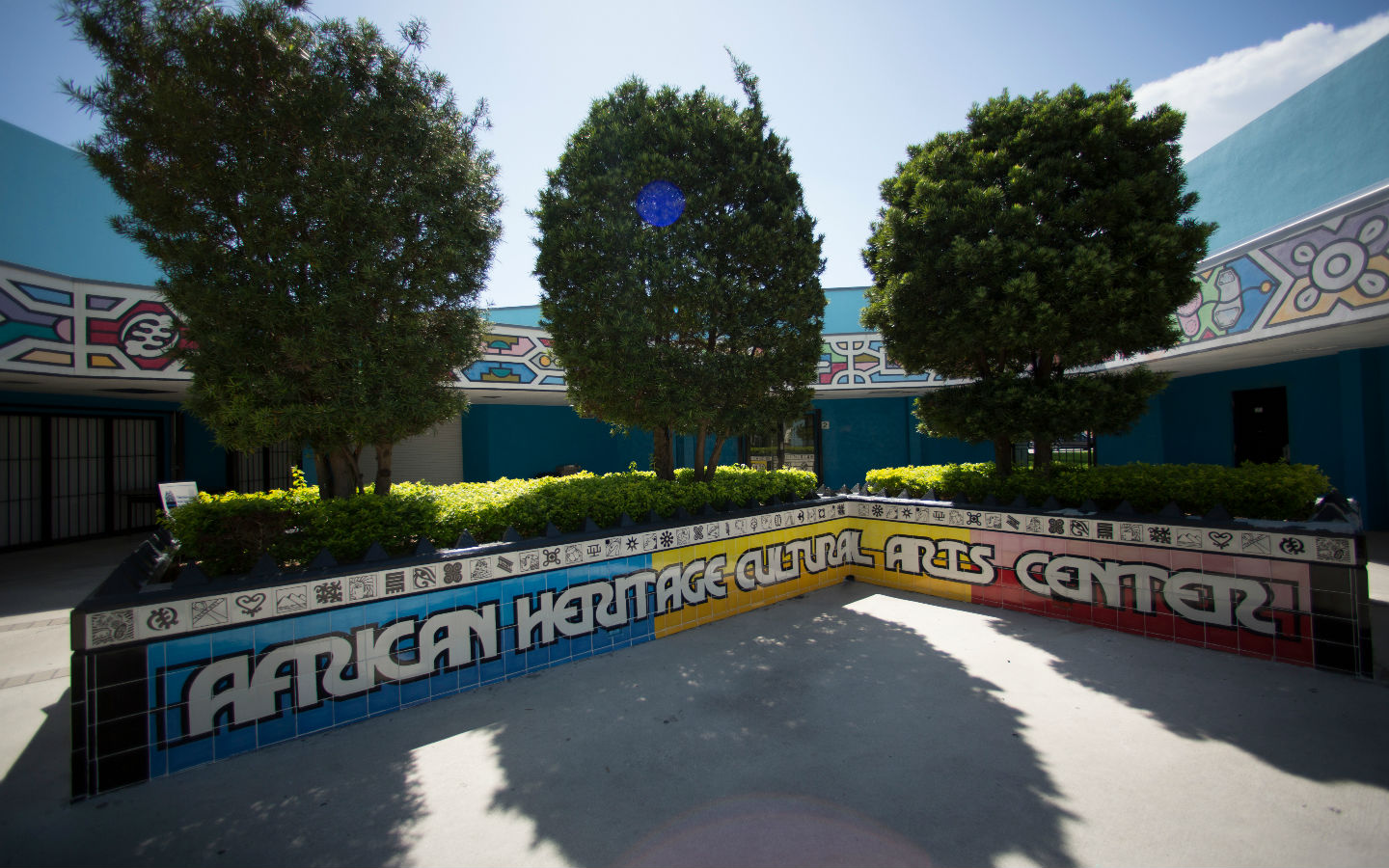
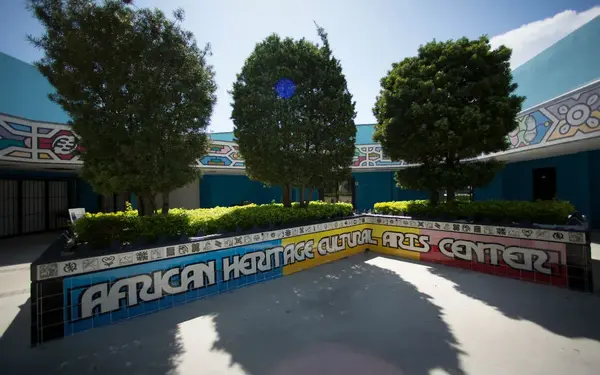
Marshall L. Davis Sr. African Heritage Cultural Arts Center
6161 NW 22nd Avenue
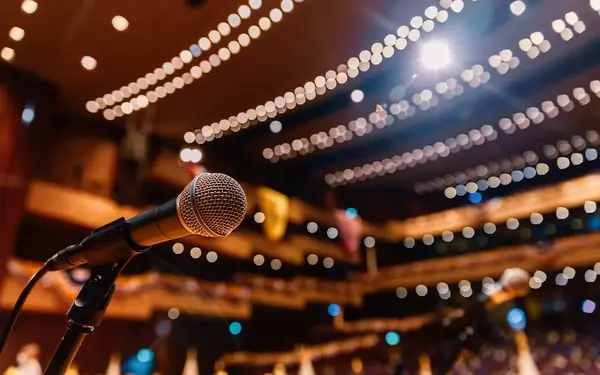
Colorfully designed with the vision of being a center for Liberty City’s artists and youth to display their work and enhance their talents, the African Heritage Cultural Arts Center opened in 1975 and has seen many famous Black artists, including Eartha Kitt, Ossie Davis, Sherman Hemsley, Ruby Dee and more. The center has an auditorium, art and dance classrooms and an exhibit area that can be utilized by the community and after-school arts programs.
Joseph Caleb Community Center
5400 NW 22nd Avenue
Opened in 1975, the Joseph Caleb Community Center was designed to alleviate poverty by providing decentralized neighborhood services. It is now a hub of activity with political forums and performing arts. It houses a library, childcare programs, county and state services and the Black Archives, which collects, archives and interprets information about the Black experience in Miami.
Georgette’s Tea Room House
2540 NW 51st Street
Georgette's Tea Room House is a historic structure in Brownsville that was built by Georgette Scott Campbell. Opened in 1940, the 13-room, English Tudor-style home was an elegant and lavish guest house that offered a secluded retreat for famous black celebrities and entertainers such as Billie Holiday, Nat “King” Cole and the Ink Spots. It also served as a meeting place for black socialites for many years.
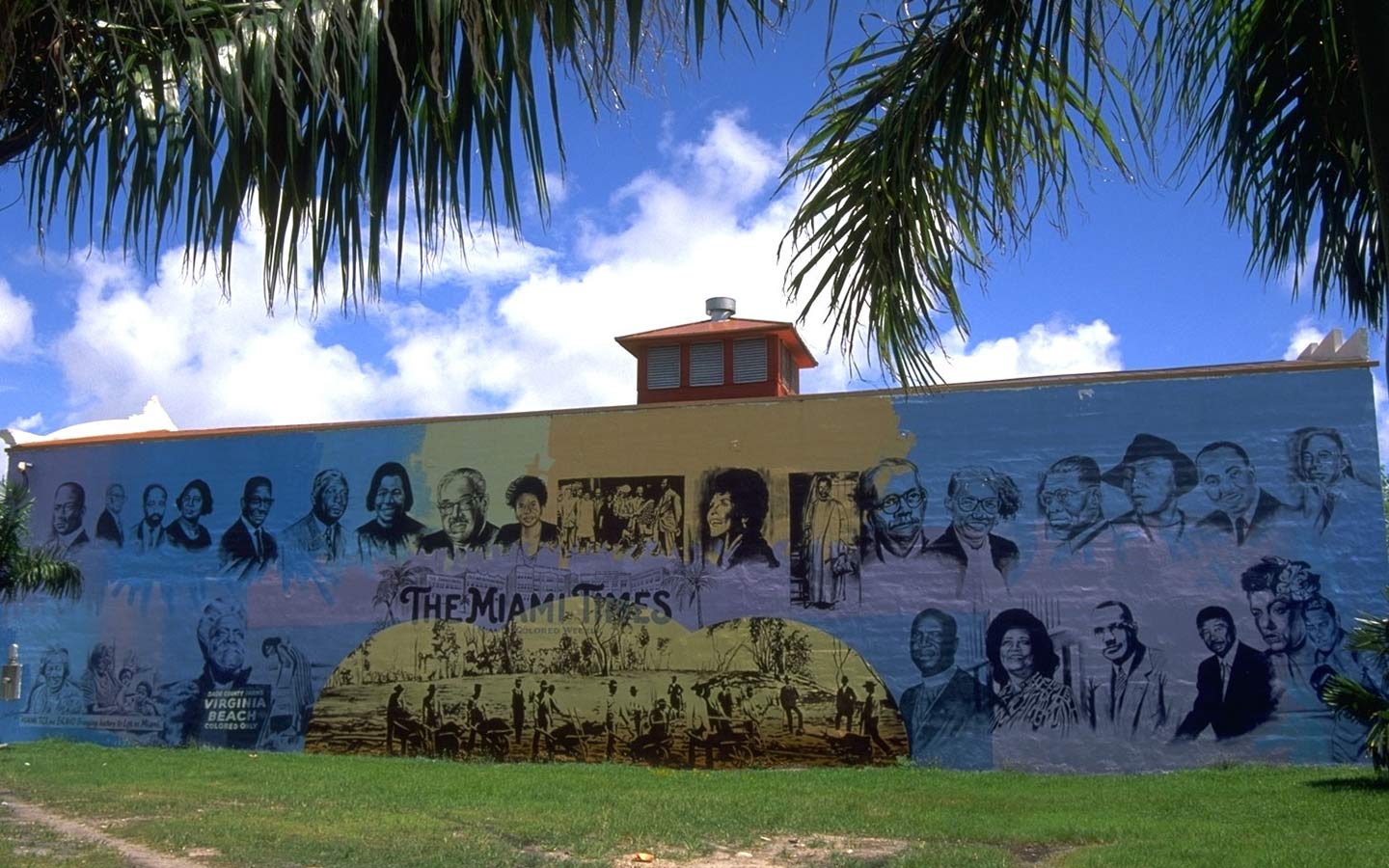
Miami Times Building
900 NW 54th Street
Founded in 1923 by Henry E.S. Reeves, The Miami Times is the oldest Black-owned and operated newspaper in the City of Miami. Originally located in Overtown, the newspaper moved to Liberty City and then to its present site, which was designed by Alfred Browning Parker.
Masjid Al-Ansar Muslim Mosque
5245 NW 7th Avenue
Masjid Al-Ansar has been in Liberty City since 1966 and includes Clara Mohammed School. Its presence demonstrates the religious diversity in one of Miami’s predominantly Black residential communities.
Brownsville
Northwest 27th to 32nd avenues between 41st and 54th streets
This pioneer neighborhood west of Liberty City was settled by a Black man, Rev. W.L. Brown, in 1920 and became known as Brown Subdivision and later Brownsville.
Evergreen Memorial Park
3601 NW 41st Street
Founded in 1913 and designated as a historic site in 1991, Evergreen Memorial Park was one of two cemeteries where Black people could be buried with dignity. Before that, Black people were buried at the back of white cemeteries. Though records of the first people buried here were lost to fire, the cemetery remains a treasure that pays homage to the past.
Lincoln Memorial Park Cemetery
3001 NW 46th Street
One of the oldest cemeteries in Miami-Dade County, Lincoln Memorial Park was first used as a graveyard in 1924. It consists of 538 vaults, most of them above-ground. This manner of burial is used in areas with a high water table, like Key West and New Orleans. Black pioneers buried here include Dr. William A. Sawyer, the first Black physician in Miami-Dade County and founder of Christian Hospital; Arthur and Polly Mays, who opened a school for rural Black children in South Dade; and Florence Gaskins, who formed the first local Red Cross chapter for Blacks.
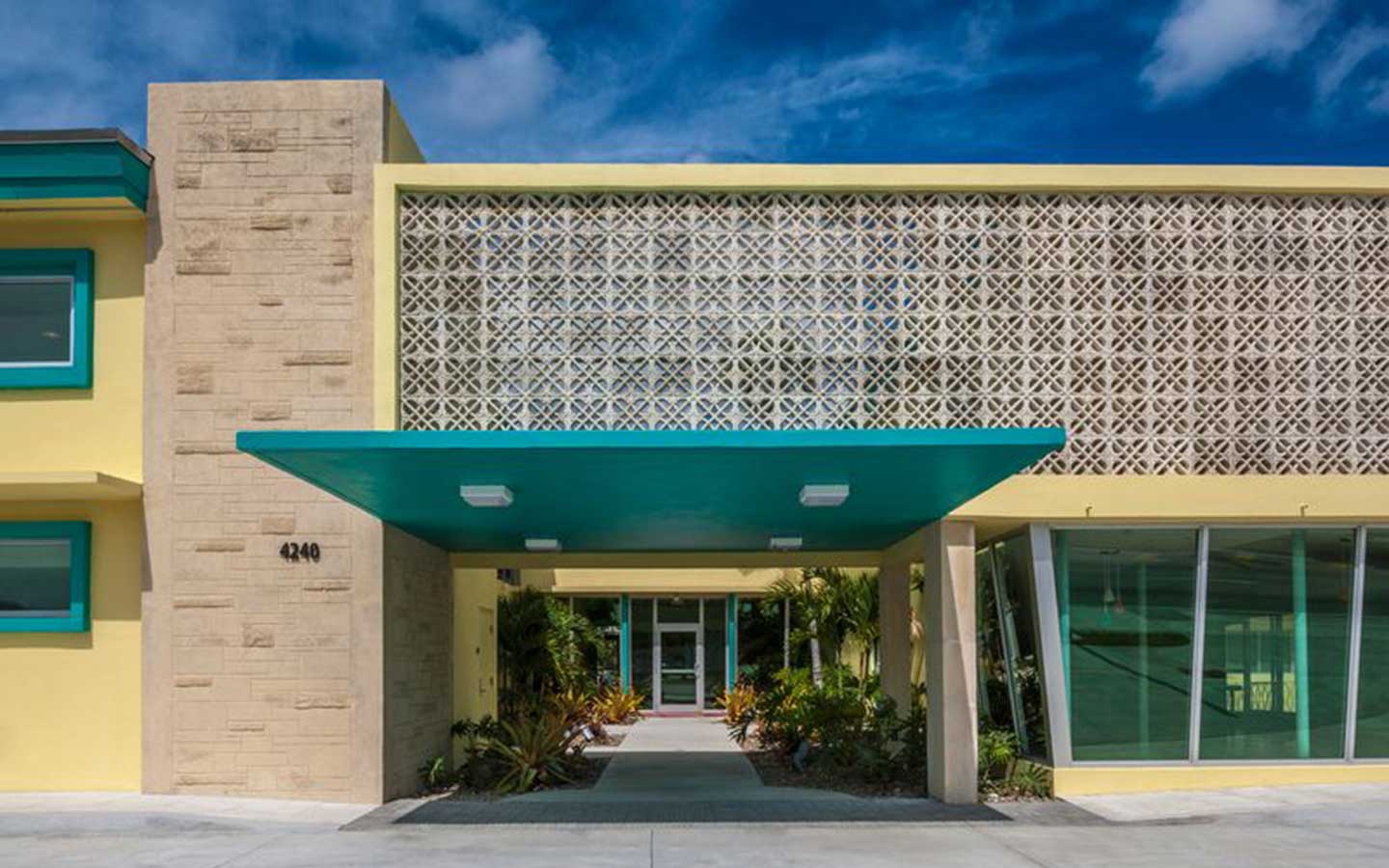
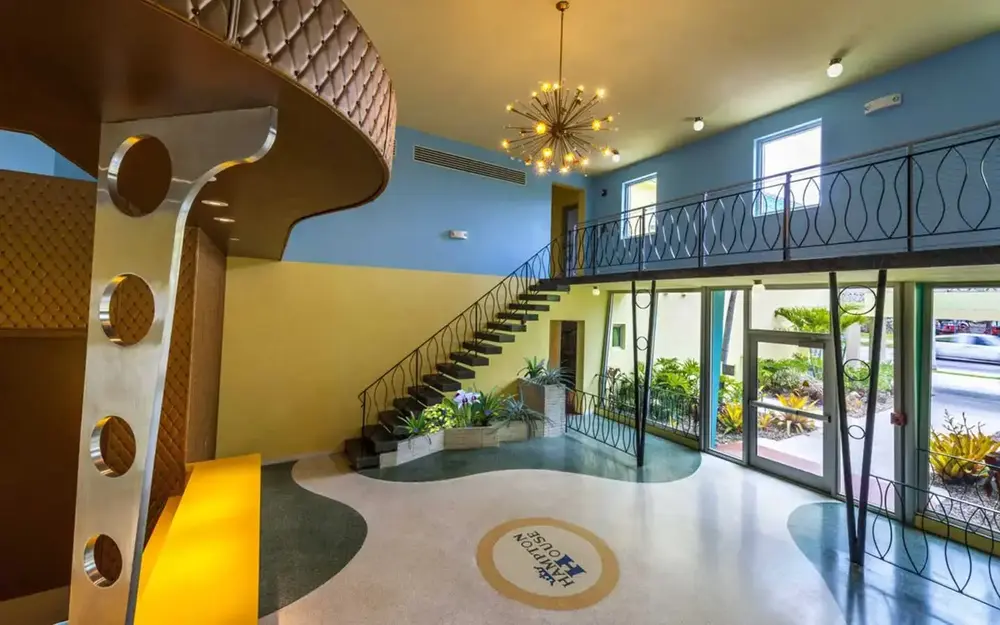
Historic Hampton House
4200-4240 NW 27th Avenue
The 54-room Hampton House hotel was once promoted as the “Social Center of the South.” Opened in 1954, the hotel also operated a popular nightclub. It’s where CORE (The Congress of Racial Equality) held its weekly meetings and Dr. Martin Luther King Jr., a frequent guest, delivered an early version of his “I Have A Dream” speech. Notables such as Muhammad Ali maintained a permanent room in the hotel. In 2001, the Hampton House Community Trust was formed to gain historic designation for the site, save the abandoned hotel from demolition and plan its restoration and use. It is now Historic Hampton House and is open to visitors.
Partners Mentioned In This Article
Explore Coconut Grove's Historic Little Bahamas Neighborhood
History of Miami Beach Through Photos of "Then & Now"
Liberty City Guide
Opa-locka: The History Of One Of America's Most Unique Cities
Visit Historic Sites in Coconut Grove
The History of Liberty Square
Historic Treasures in Homestead