
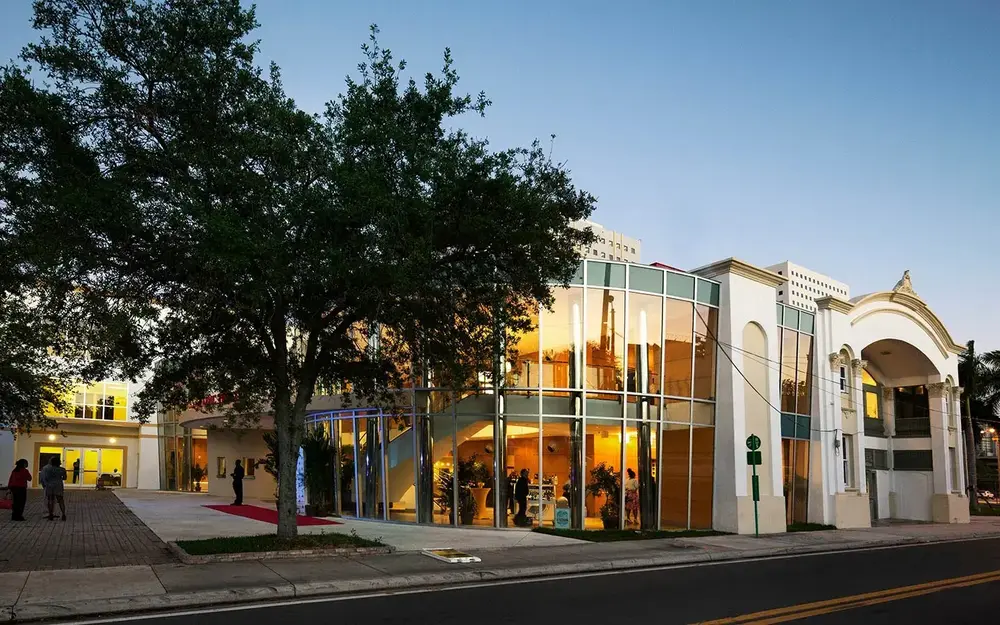
A Look Back At Miami's African American And Caribbean Heritage
Overtown is one of the oldest neighborhoods located in the original boundaries of the City of Miami. Segregated by both custom and laws, it began as “Colored Town” at the turn of the 20th century, an accommodation to Miami’s anticipated tourist industry. Over time the people developed a thriving community of their own.
The area was assigned and limited to Black workers who built and serviced the railroad, streets and hotels. The success of Miami’s pioneer tourist industry depended on the labor of Black workers from the Bahamas and the Southern states. For more than fifty years they were the primary work force in Miami.
Incorporation of Miami as a City and Civil Rights
When the decision was made to incorporate Miami as a city in 1896, Black men were used as voters, but later disenfranchised. Nearly one-third of the men who stood for the incorporation of the City of Miami were Black. Since the required number of white male registered voters did not participate, Black male registered voters were used to reach the number required by the State of Florida to form a new city.
After helping Miami become a city, the Black incorporators lost their civil rights to existing public policy. Black Codes, enacted decades earlier, followed by Jim Crow laws, restricted the civil rights of Black people throughout the South in every phase of life.
Growth of Colored Town/Overtown
In spite of limitations, Colored Town/Overtown grew and developed into a vibrant community. Schools, churches and businesses flourished. Most of the goods and services in the community were provided by the residents.
As early as 1904, the official City of Miami directory listed businesses owned and operated by Black people, including general goods and services, a medical doctor, 26 laundresses, and several hundred laborers.
The Lyric Theater opened in 1913 as the major center of entertainment for Blacks in Miami. It was built, owned and operated by Geder Walker, a Black man from Georgia. Miami’s Colored Board of Trade was established as a clearinghouse for commercial and civic betterment.
In 1915 there were about 7,000 “Colored” people in Miami and their holdings in real estate and personal property were estimated at $800,000. Black women were not members of the Colored Board of Trade, but some were in business, including seamstresses, landlords, restaurant owners, and a hat maker. Several owned their own properties.
Black Migrants and Immigrants in Miami
Black residents living south and north of Miami’s city limits, in Coconut Grove and Lemon City respectively, routinely scheduled trips to Miami’s Colored Town to shop, to transact business and for entertainment.
Over time Black migrants settled in Miami’s Overtown from North Florida and other Southern states. Immigrants arrived from the Bahamas, Cuba, Haiti, Jamaica, Trinidad and Tobago, Barbados and other countries throughout the Western Hemisphere. Their common heritage: slave fore-parents forced from Africa and left as cargo in various ports throughout America.
Different cultures developed in the various ports and some languages changed, but the common ground for all was race. Skilled, the migrants and immigrants arrived with determination to improve the economic conditions for their families. In turn they helped build a tourist mecca for others to enjoy.
Transformation of Little Haiti
In the late 1970s and for the next 17 years, some 25,000 to 35,000 Haitians settled in Miami, fleeing political repression and poverty in their country and looking for a better life for themselves and their children. Miami’s Haitian refugees settled in a decaying 200-square-block area bordered by 41st Street and the Little River at 83rd Street and by the I-95 Expressway and Biscayne Boulevard. Formerly known as Edison/Little River, the neighborhood is now marked by its numerous Haitian residents who make up close to 65 percent of its population and is today widely known as Little Haiti.
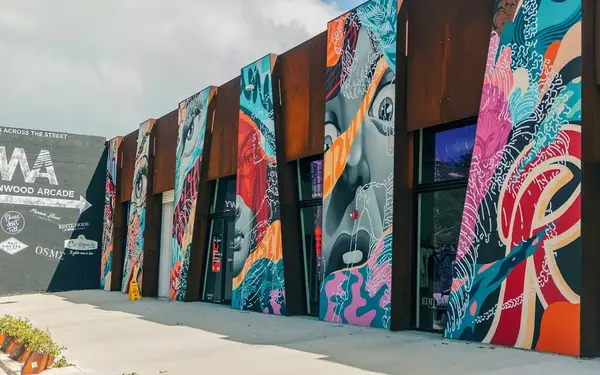
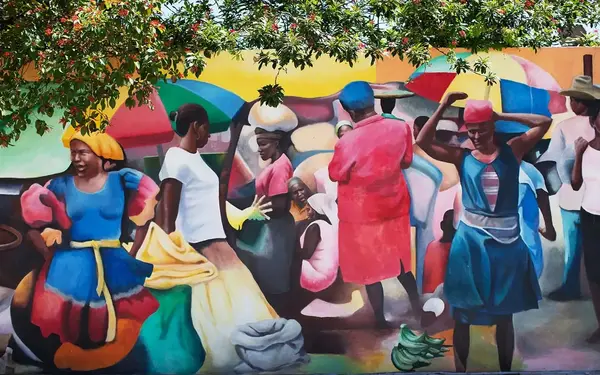
The community has experienced a revival in its residential and commercial sectors, due mainly to the settling of Haitians in the neighborhood. With a population of about 34,000, Haitians have carved out a place in Miami they call their very own and have given the neighborhood a feeling of being in the Caribbean with world-famous, colorful, Haitian art throughout Little Haiti. Businesses along North Miami Avenue and Northeast 2nd Avenue are excellent examples of this industrious community’s strong sense of ethnic pride and entrepreneurial energy.
The community the migrants and immigrants built for themselves was geared toward tourism, too. This contained community was self-sufficient, alive and well, and busy every day. Around-the-clock business and cultural activities kept the lights on and people involved. White tourists and white residents frequented the area to enjoy the entertainment, to partake of the exotic foods and to listen to the music, especially jazz and gospel singing.
Celebrity Visitors and Entertainers Flock to Overtown
At least one national convention was held annually in Overtown, where sufficient hotel rooms, restaurants, cultural events and entertainment were in full supply. The repeated business brought by visitors helped stabilize the economy in the community, which in turn promoted pride in a people who were self-motivated and self-sustaining.
From the 1940s until the early 1960s the residents of Overtown continued to draw on their own resources, creating a “sense of place.” In addition to regular goods and services, there were many fine restaurants, a privately owned tennis court and several first-class hotels in Overtown.
One such hotel, the Mary Elizabeth, was a favorite retreat for such well-known personalities as United States Supreme Court Justice Thurgood Marshall; Congressman Adam Clayton Powell; labor leader A. Philip Randolph; educator, Dr. Mary McLeod Bethune, then-president of Bethune Cookman College and the National Council of Negro Women; Dr. Carter G. Woodson, “the father of Negro History;” and W.E.B. DuBois, an internationally known intellectual and author.
Like Broadway, Colored Town was aglow 24 hours; it was “the Great Black way.” Nearly all of the arts were available in Colored Town through touring music, dance and drama groups as well as traveling literary artists, such as poet Langston Hughes and folklorist Zora Neale Hurston. Paul Robeson and Marian Anderson were among the featured vocalists; world-famous boxer Joe Louis and baseball greats Jackie Robinson and Roy Campanella also frequented the area.
Local residents jammed from dusk to dawn with entertainers Count Basie, Ella Fitzgerald, Cab Calloway, Lena Horne, Josephine Baker, Billie Holiday, Sammy Davis Jr., the Inkspots, Louis “Satchmo” Armstrong, Nat “King” Cole, B.B. King, Bo Diddley, Aretha Franklin, Dionne Warwick and many others who performed all year. Local resident and entertainment promoter, Clyde Killens, was primarily responsible for bringing the performers exclusively to Overtown from Miami Beach.
Transformation of Overtown and Present Day
Over the years Overtown lost its magic. Urban renewal, desegregation and the construction of two expressways destroyed the community and the once vibrant economic and cultural center.
Overtown is alive again, led by the Overtown Advisory Board, the Community Development Corporations (CDCs), and private and government agencies. The need for housing is being met by the local churches, including St. John and Greater Bethel AME.
The Black Archives, History & Research Foundation of South Florida Inc. is developing the Historic Overtown Folklife Village, a two-block area retail, cultural and entertainment district. The area will again become a tourist destination focusing on two themes: the African Diaspora, the resettlement of people from ports (countries in the Caribbean) where Blacks were left as cargo; and the Harlem Renaissance, self-definition of the Black experience through the literary, visual and performing arts.
The setting is historic sites and new construction, in character, as mixed-use facilities. Some housing will have lofts and flexible spaces: rehearsal and performing spaces for artists, artisans, craftspeople, inventors and entrepreneurs. Green space and landscaping is designed to help promote a safe and creative environment. Restaurants, bed-and-breakfast sites and a conference/family-reunion center will again host national conventions and be available as an annual retreat.
Five of the sites in the Village are listed on the U.S. National Register of Historic Places. The Lyric Theater is the anchor site of the Historic Overtown Folklife Village. It opens into the 9th Street pedestrian mall, a transportation corridor that connects Overtown to other historic sites in Miami-Dade County and the State of Florida on the Black Heritage Trail.
About the Author
Dr. Dorothy Jenkins Fields is a historian and a native Miamian. Her maternal grandparents settled in Key West, Florida, at the turn of the century from the Bahamas by way of Haiti and Sierra Leone, West Africa, over time. An education specialist with Miami-Dade County Public Schools, Division of Cultural Programs, Dr. Fields is also the founder and archivist for the Black Archives, History and Research Foundation of South Florida Inc. She completed doctoral studies in Public History at the Union Institute, Cincinnati, Ohio.
Miami's History & Heritage
History of the Miccosukee Tribe
The History of Liberty Square
Art of Black Miami Spotlight
The Legacy of Lemon City And The Magic Of Little Haiti
Miami Beach History Through Vintage Postcards
Downtown Miami's Historic Center