
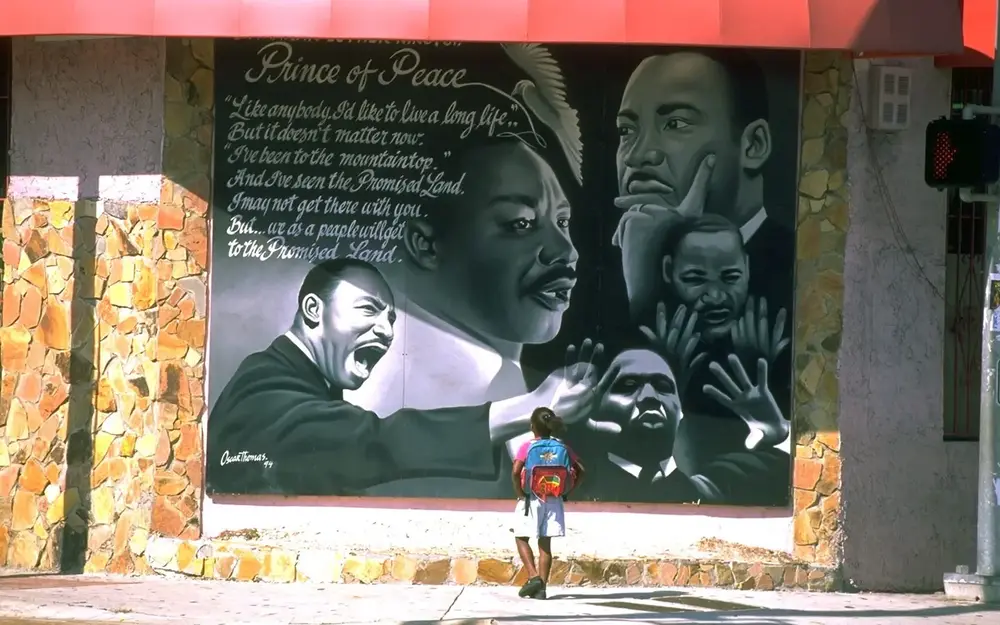
Miami’s Tributes To Dr. Martin Luther King Jr.
- February 05, 2026
Arguably the most influential figure in the nation’s Civil Rights movement, the Reverend Dr. Martin Luther King, Jr. was the chief spokesperson for the movement to end racial discrimination in state and federal laws in the 1950s and 1960s.
He organized several marches and peaceful protests, including the famous March on Washington in 1963, where he delivered his iconic “I Have A Dream” speech. He was awarded the Nobel Peace Prize on October 14, 1964 for combating racial inequality through nonviolence.
Dr. King was also awarded the Presidential Medal of Freedom and the Congressional Gold Medal. Today, the nation observes Martin Luther King, Jr. Day annually in January to honor his courageous work towards freedom and equality.
Miami pays tribute to Dr. King's legacy year-round in its own unique ways, from parks to parades and historic sites where the influential figure often visited and spoke.
Dr. Martin Luther King, Jr. and Miami
Dr. King's Miami Retreat: Historic Hampton House
Miami has a special claim to Dr. King. He visited the city regularly and would stay at the Historic Hampton House in Liberty City. The hotel was a hotspot for Miami’s Black community, with other notables who stayed there including Muhammad Ali, Sammy Davis, Jr., Jackie Robinson and others. In fact, Dr. King delivered an early version of his “I Have A Dream” speech at the Hampton House in 1960.
In Miami, Dr. King also spoke at the Mount Zion Baptist Church in Historic Overtown, and he visited Virginia Key Beach, which was once an oasis for Black beachgoers during the times of segregation.
Today, the Miami Dade College Wolfson Campus Library archives are home to a collection of photographs and videos of Dr. King visiting Miami throughout the years. The Black Archives History & Research Foundation of South Florida in Historic Overtown is also home to a wealth of information.
Miami's Pioneering Tribute To Dr. King: A Legacy Of Unity
Fast forward to 1977 and Miami was the first city in the country to organize a Martin Luther King, Jr. Day Parade thanks to the leadership of civil rights activist Preston Marshall, who was a contemporary of Dr. King’s.
Today, the parade features floats, marching bands, Carnaval dancers, student athletes and community leaders along Liberty City’s Martin Luther King, Jr. Boulevard. It culminates in a festival at Martin Luther King, Jr. Park, where a statue of the reverend has been erected.
In March 2023, North Miami Beach erected a statue of King to honor his fight for civil rights. Found in Martin Luther King Park, a narrow greenbelt that runs along 155th Terrace and NE 16th Avenue, the monument was strategically placed in what residents once called “the alley,” where a wall separated Blacks from whites during segregation. The area serves as a memorial dedicated to the fight for equality.
Martin Luther King, Jr. Boulevard
Martin Luther King, Jr. Boulevard runs east to west along NW 62nd Street from Biscayne Boulevard to Hialeah, through Liberty City, Little Haiti and Brownsville. In Liberty City, you’ll find local hair salons, barbershops, boutiques and restaurants, including MLK (My Little Kitchen) Restaurant, which dishes up homestyle soul food.
Martin Luther King, Jr. Boulevard is also where the Marshall L. Davis, Sr. African Heritage Cultural Arts Center is located in Liberty City. The center, which opened in 1974, features an auditorium, art and dance studios and an exhibition area. It’s dedicated to the community’s artists and children in order to nurture and display their talents and creative ambitions.
Martin Luther King, Jr. Mural
Dr. King is honored along Martin Luther King, Jr. Boulevard at NW 62nd Street at NW 7th Avenue with a mural by the late artist Oscar Thomas. Painted in black and white, the mural, entitled “Prince of Peace,” depicts several images of Dr. King in oration.
There’s a dove flying with an olive branch, the symbol for peace, and a quote that reads: “Like anybody I’d like to live a long life… / But it doesn’t matter now. / I’ve been to the mountaintop / And I’ve seen the Promised Land. / I may not get there with you, / But... We as a people will get / to the Promised Land.”
It’s a powerful symbol of the Civil Rights movement and it’s particularly close to the hearts of the residents of Liberty City - and all of Miami.
Partners Mentioned In This Article
Miami Beach History Through Vintage Postcards
The Legacy of Lemon City And The Magic Of Little Haiti
Historic Treasures in Homestead
Inside Miami's "Historic Spanish Village"
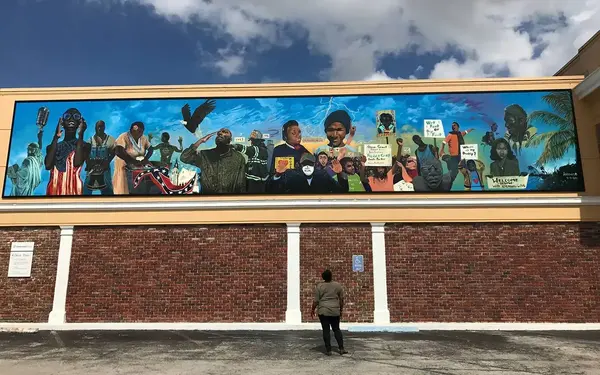
Addonis Parker: Miami Muralist and Restorationist
Miami's History & Heritage
History of the Miccosukee Tribe