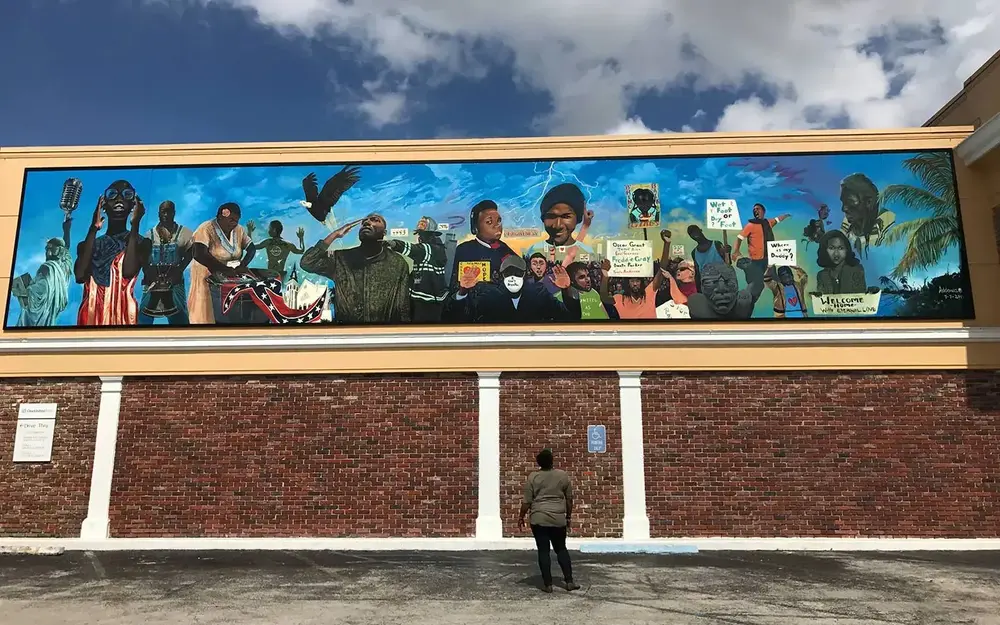
Addonis Parker: Miami Muralist and Restorationist
- February 24, 2026
A key figure in the art scene of Greater Miami & Miami Beach, the larger-than-life muralist Addonis Parker uses towering murals in historic neighborhoods to intertwine heritage, spirituality and an unyielding commitment to community connection.
Immerse yourself in the journey of an artist whose brushstrokes capture the profound stories of Miami’s cultures both past and present for generations to come.
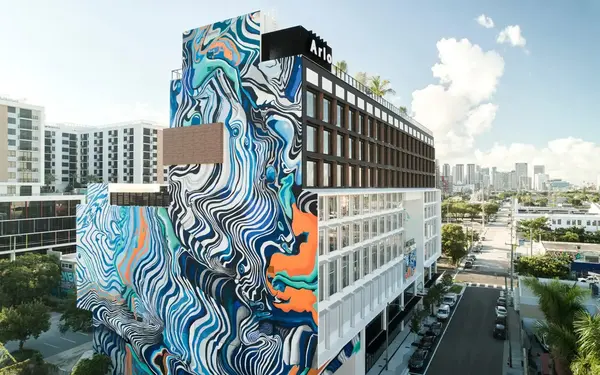
Towering at 6 feet 7 inches tall, Parker paints large-scale murals that some might assume mirror his heightened perspective. But Parker’s motivation in painting 10-story murals is to scale himself down so that he's the tiny ant in the big, wide world.
From the written word to 3D sculptures, oil paintings and charcoal sketches, Parker’s portfolio spans diverse mediums, each resonating with brilliant imagery, subtle irony and deep introspection. But you won’t find his pieces just anywhere.
“I’m very strategic about where I paint murals,” Parker says. “Locations have to have historical relevance. It has to be somewhere where there is a certain energy – a spiritual connection with the community.”
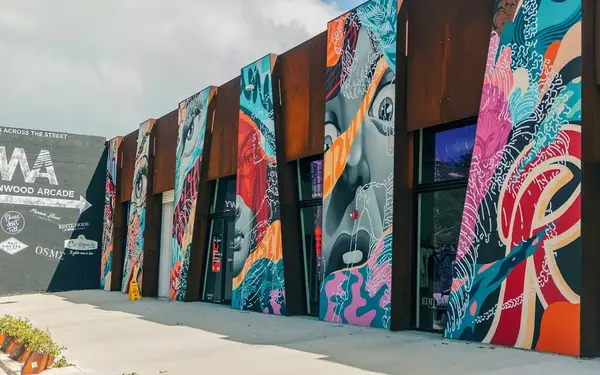
Parker’s murals grace neighborhoods such as Historic Overtown and Liberty City, culturally rich areas that have served as enclaves for people of color in Miami since the 1890s and 1930s, respectively.
Residing in Liberty City since 2001, Parker says he uses his work to bridge communities by collaborating with fellow artists.
“Liberty City sounded like freedom to me,” he says. “It was like a bell going off. Liberty City reminded me of a collection of Black ideas or arguments that were always misunderstood, but there was no brotherhood. I saw the power and the potential.”
Though Parker first gained notoriety as an artist in Miami, he’s actually an Ohio native who moved to Central Florida as an adolescent.
“In middle and high school, on Valentine’s Day, I would rack up,” says Parker, recalling the custom greeting card poems he'd write for his classmates. “People would give me $5 to $8 per card. Each one was different. A girl cried over her card. I knew that day that I could write.”
While many budding artists formalize their skills in college, Parker challenged the status quo to carve his own path. “If you look at everything, you’re looking at it from a European perspective,” he told his art professor at Georgia College & State University. “You want me to embrace another culture, which is fine. That’s the learning process. But how do I find myself in this?”
Parker drew inspiration from mentor Hassan Patterson, who encouraged Parker’s artistic evolution from charcoal and colored pencil drawings to painting. Parker says God gave him the ability to envision a finalized piece of his art before it is actually completed. Other college professors also offered valuable lessons in manhood, personal growth and the business of art.
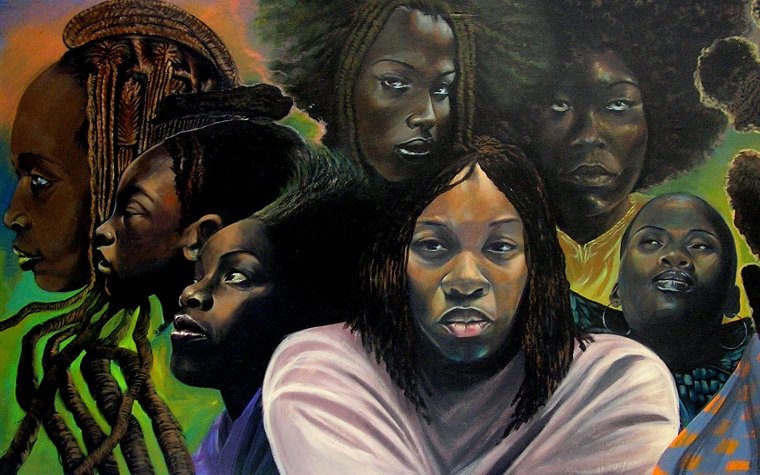
Parker’s unique combination of experiences helped him make his mark on Miami’s art scene. He is well-known for his restoration murals, including the notable Dr. Martin Luther King Jr. mural in Liberty City by the late artist Oscar Thomas and the Everyday Life murals in Overtown that were originally created by legendary Miami artist Purvis Young.
Parker’s original artworks have also garnered international recognition and attention. His 2015 mural Thunder and Enlightening is featured on the façade of OneUnited Bank, the nation’s largest Black-owned bank. Parker worked with Liberty City youth to create the community-driven mural. If you open an account at OneUnited, you can opt for a bank card adorned with Parker’s beautifully Afro-centric artwork.
“The work he does is very good,” says Tamar McLean, a professional photographer who documents Parker’s works. “The OneUnited Bank mural – it shows a lot, from days of slavery to what’s going on right now. I’m pretty sure he will do well in the future. I really hope his work will go into the Pérez Art Museum Miami.”
Parker recently debuted his Still We Rise: The Art of Addonis Parker exhibit in Opa-locka and future shows are in the works. But his ambitions exceed regional acclaim.
“Everything I wanted, God gave to me,” he says. “I am free. I don’t have to hide behind the shroud of intellectual nonsense. I can be myself. I can be the Black man I was looking for. I don’t work for anybody. I give to and feed the poor. I minister to the rich.”
Explore Arts & Culture In Little Havana
Cultural Creatives That Everyone Should Know
Afro-Cuban Art In Miami
Explore Art, Culture and History In Coral Gables
Three-Day Miami Itinerary For Art Lovers
Miami's Finest Private Art Collections
Wynwood's Thriving Arts & Culture Scene