







William Lane’s Iconic Lifeguard Towers
- November 19, 2024
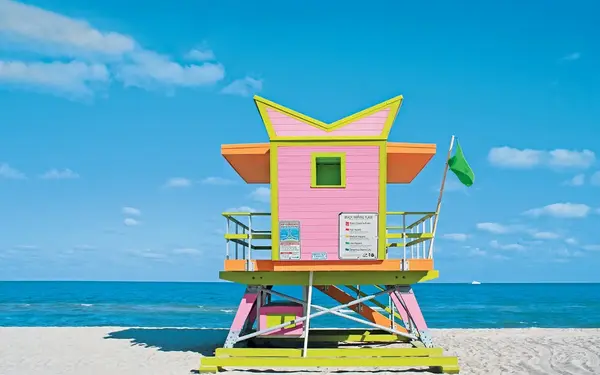
They’re the colorful icons of Miami Beach that are always photo-ready. Not only do the Miami Beach lifeguard towers aid in helping lifeguards protect swimmers; they are also artful symbols of the area’s past and present. Designed by queer architect William Lane, the lifeguard stands flaunt a rainbow of colors, Art Deco style, and reflect the Miami lifestyle. Taking a picture in front of one of them is a must-do on any trip to Greater Miami & Miami Beach.
Who Is William Lane?
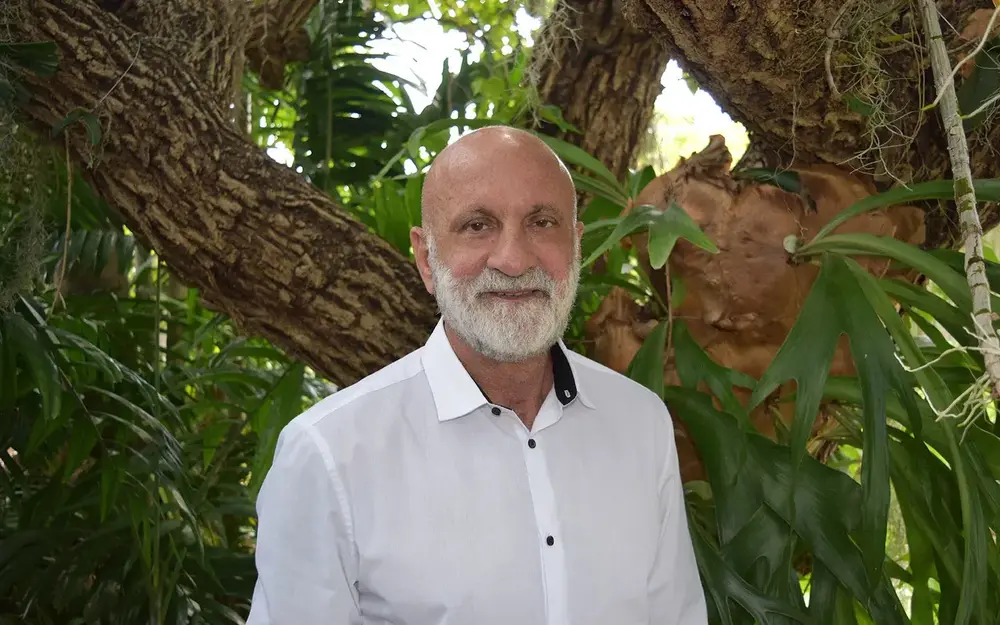
William Lane is an award-winning architect who’s credited with splashing his distinctive, surreal mark throughout the destination’s public and private spaces. After working in the studio of artist Dennis Oppenheim in New York, the Office for Metropolitan Architecture in London, and I.M. Pei and Partners in New York, Lane established his own practice in 1990 and moved to Miami in 1992.
In Miami, he is most known for the whimsical lifeguard towers that dot Miami Beach, each with its own personality and flair. But he was also behind the award-winning oval antennae pavilion at South Pointe Park at the southern tip of South Beach and the restroom/shade/concession building in Samson Oceanfront Park in Sunny Isles Beach. He also played a part in designing Freehand Miami, which he likes to frequent.
The History of the Towers
After Hurricane Andrew hit South Florida in 1992, the City of Miami Beach hired Lane and his design team to fashion new lifeguard towers to replace five damaged in the storm. When crafting the towers in 1995, Lane drew inspiration from the city itself. Miami Beach is famous for its Art Deco-style buildings, and Lane took a cue from the buildings that define the city, along with its rich melting pot of cultures.
“The lifeguard towers were influenced not only by Miami’s mid-century and Art Deco architecture but also by its Caribbean culture and the use of vibrant colors derived from the natural beauty of the tropics,” Lane said.
He was influenced by his friendships with other renowned creatives.
“When I first moved to Miami, I had the pleasure of becoming friends with Morris Lapidus, the architect of the Fontainebleau Hotel, Eden Roc Hotel and the Lincoln Road follies,” Lane said. “His use of contemporary forms mixed with bold geometries and even baroque elements inspired me to push boundaries that other designers may not have.”
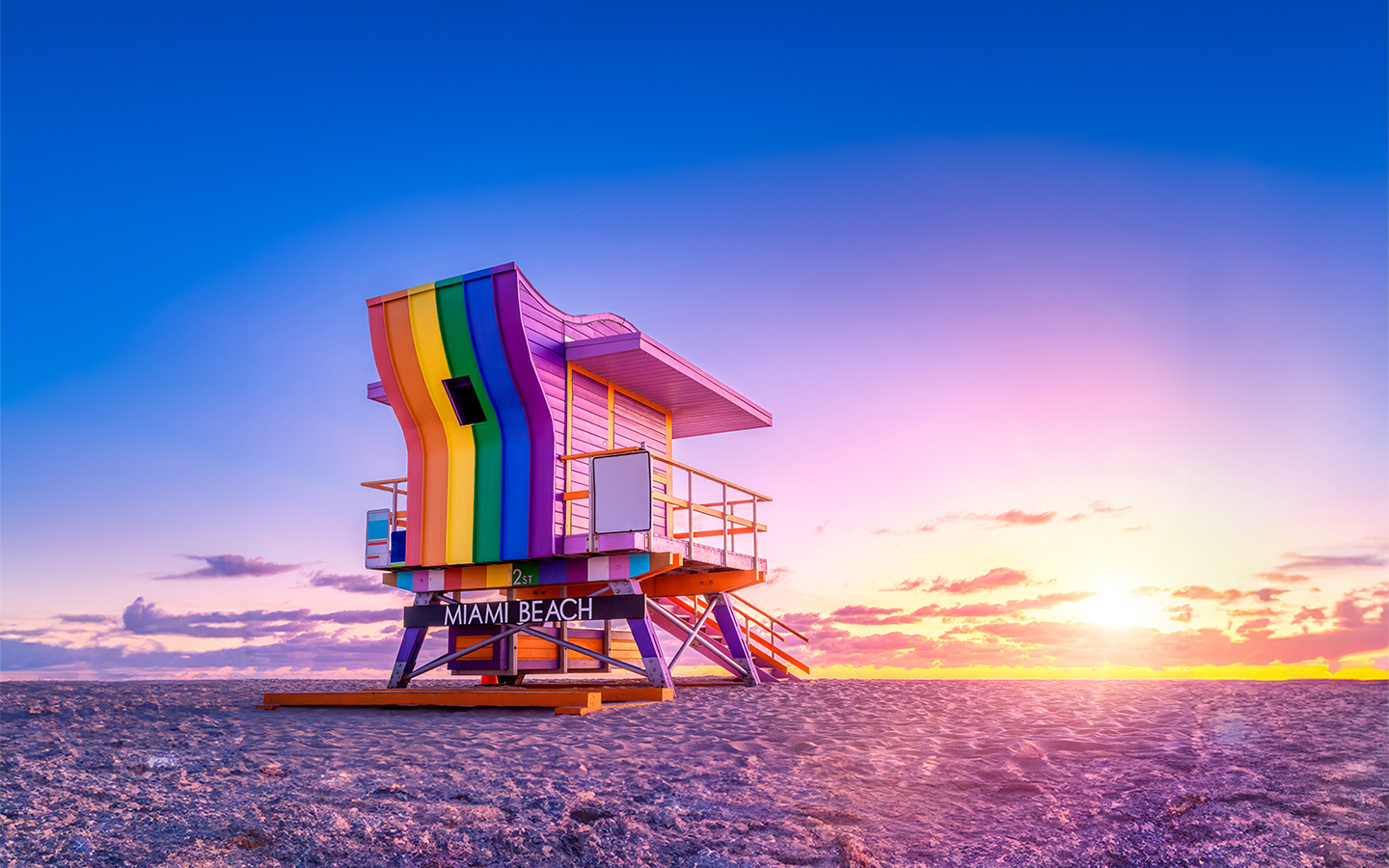
Soon, just like the Art Deco buildings, the unique, vibrant lifeguard stands became a trademark of Miami Beach. In 2017, he was approached again by the city to create six new prototypes to replace 36 lifeguard towers from the tip of South Pointe Park to 86th Street. His designs once again reflected the Art Deco style and Miami’s LGBTQ population.

Discovering The Design And Architecture Of Lane’s Towers
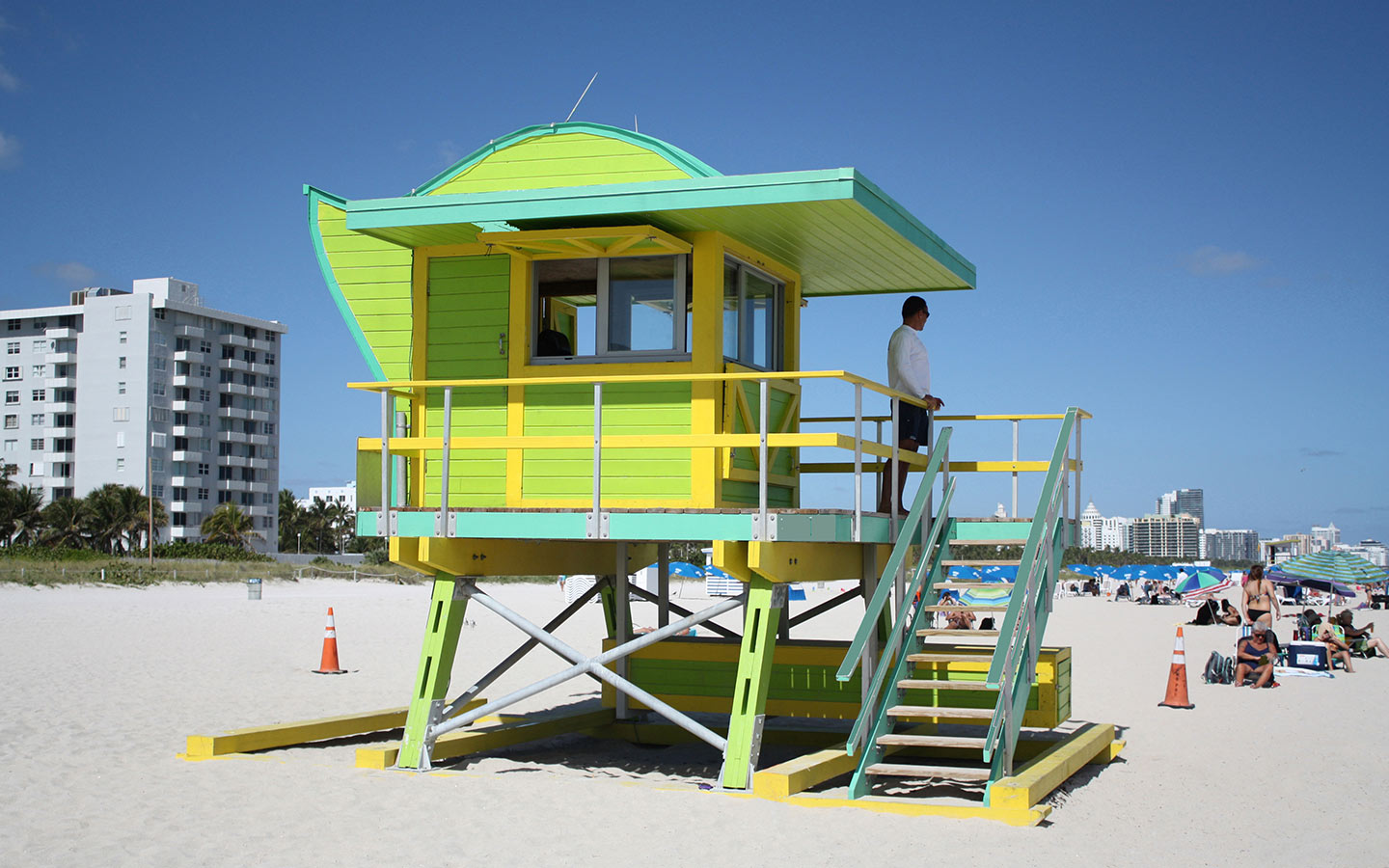
When you first spot one of the lifeguard towers, there’s no denying that they still embody Miami and its time-honored Art Deco and Miami Modern (MiMo) heritage. These are not your typical lifeguard stands that favor function over form and design. They are color-drenched pieces of architectural art. As soon as you step onto the bright-white sands of Miami Beach, the towers’ vibrant mix of colors and eclectic shapes grab your attention. You’ll spot rooflines that mimic waves and sunbursts, with curls and sharp angles and even swooping forms that call to Miami Beach’s mid-century style. Lane compares the towers to “the Moai figures on Easter Island” in that “they are an expression for identity and culture on Miami Beach.”
The lifeguard towers’ color mixtures also stand out. Some are splashed in pink with green and orange accents; others are dashed in purple and trimmed with lavender and peach; some are teal with royal blue and lime combinations. Lane’s parade of rainbow of colors is not only a nod to the destination’s bright tropical fauna but an homage to the Pride flag and Miami’s LGBTQ community.
The next time you’re sunbathing or just enjoying Miami Beach, stop to snap a few photos that capture the lifeguard stands. And discover more about William Lane and his design firm’s projects around Miami.
Art & Culture in Miami Beach
Explore Art & Culture In Little Haiti

27 Travels Reveal Their Favorite Places in Miami

LGBTQ Farmers: Nurturing Miami's Food and Community
Ultimate Art Lover’s Guide To Miami
Miami's Must-See Shows of 2026

Explore Miami's Performing Arts Venues