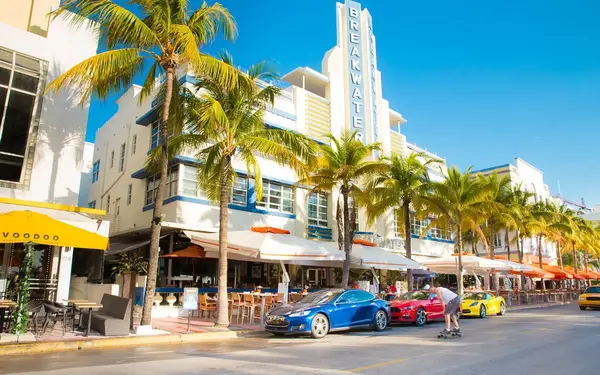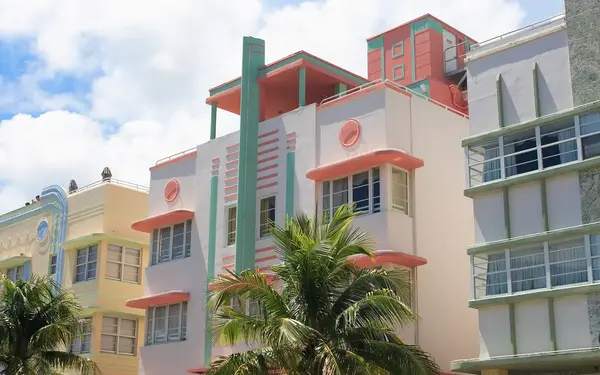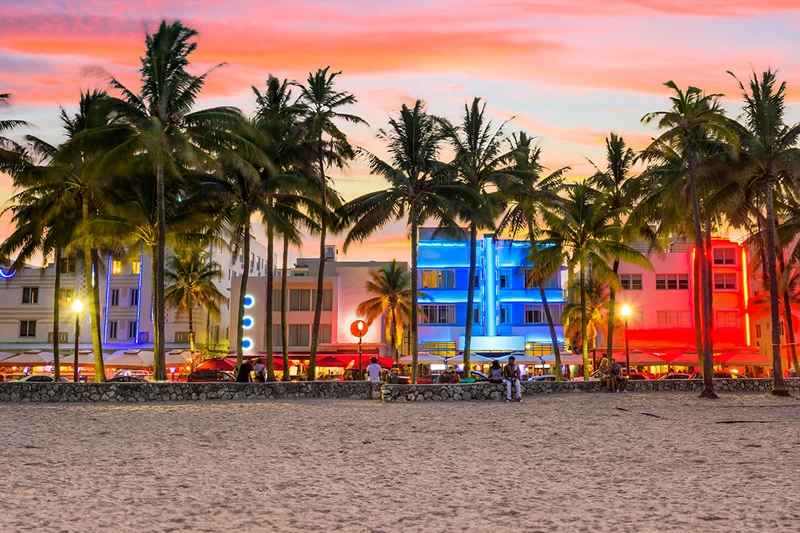

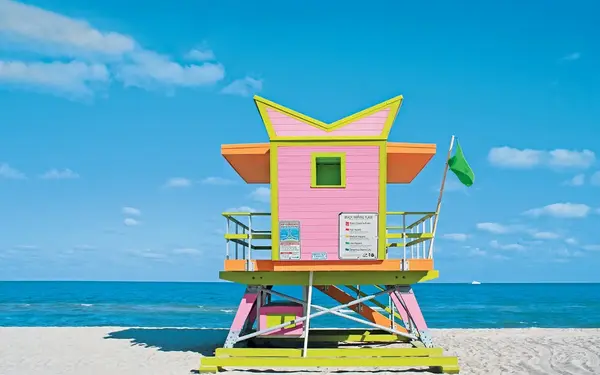




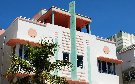
 If you’re visiting the Art Deco District in South Beach for the first time, you might find yourself wondering whether you just landed in a whimsical pastel paradise. The sleek, detailed, glamorous architecture with curving lines painted in shades of pink, blue, purple, green and yellow seems like it’s of another era. The district, between 5th Street and 23rd Street along Ocean Drive, Collins Avenue and Washington Avenue, is part of what makes the area so unique and well worth exploring.
What Is Art Deco Architecture?
Art Deco architecture originated in France in the 1910s and started achieving worldwide attention by 1925. The style made its way to many cities around the world, from New York to Shanghai and Miami. It became a major architectural style of the late 1920s and ‘30s, reflecting the period of the Roaring ‘20s and old Hollywood elegance with ornamentation like sunbursts, geometric designs and rich materials, such as marble and chrome.
Where To See Art Deco Architecture In Miami Beach
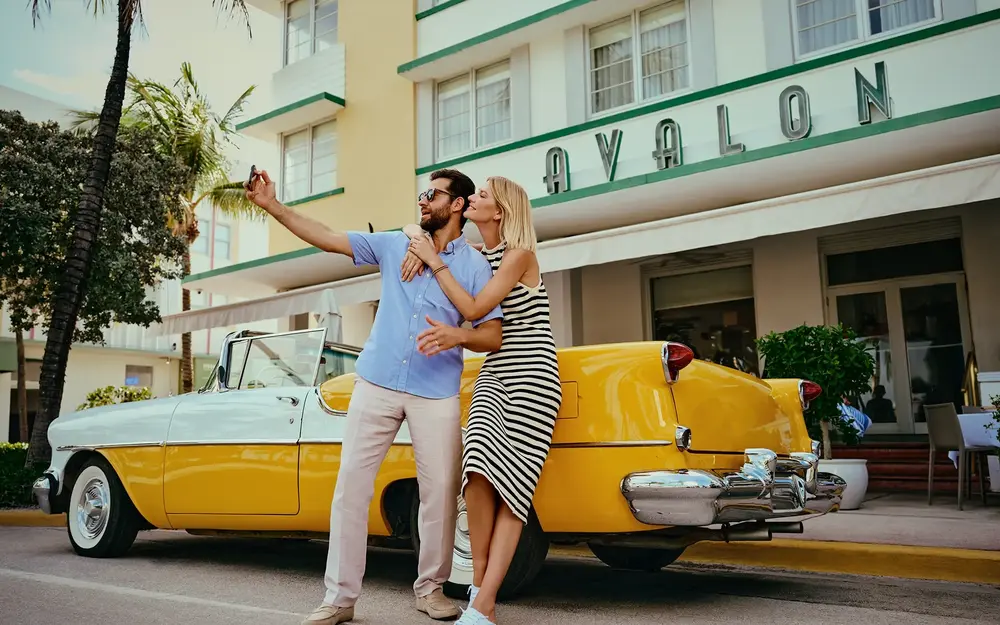
You can find Art Deco architecture all over South Beach, but the most famous stretch (often seen in movies) is on Ocean Drive between 5th and 15th streets, which at night is beautifully illuminated with neon lights and signs. Instantly recognizable Art Deco hotels such as the Colony Hotel, the Hotel Breakwater South Beach and the Hilton Grand Vacations Club McAlpin Ocean Plaza Miami (formerly the McAlpin Hotel) feature beautiful pastel color combinations and are favorite backdrops for selfies. Discover more places to see Art Deco and all of the architecture styles in Miami Beach.
Art Deco Welcome Center and Tours
The Art Deco Welcome Center at 1001 Ocean Drive is a full-service visitor center and museum. Operated by the MDPL, it offers daily walking tours, exhibits, lectures, films and maps to help you explore the Art Deco District. You can also find books, brochures and Art Deco-related knickknacks in the gift shop. The Welcome Center is open seven days a week, from 9 a.m. to 5 p.m.
The walking tours can take up to two hours and illuminate the history of not only Art Deco but also the Mediterranean Revival and Miami Modern (MiMo) styles popular in the historic district. The tours depart daily at 10:30 a.m. except major holidays. You can also take the MDPL’s self-guided audio tour (approximately 1.5 hours and available in English, Spanish, German and French) as well as private tours. Or take a two-hour Miami Beach Bike Tour offered by Bike and Roll Miami.
Art Deco Events
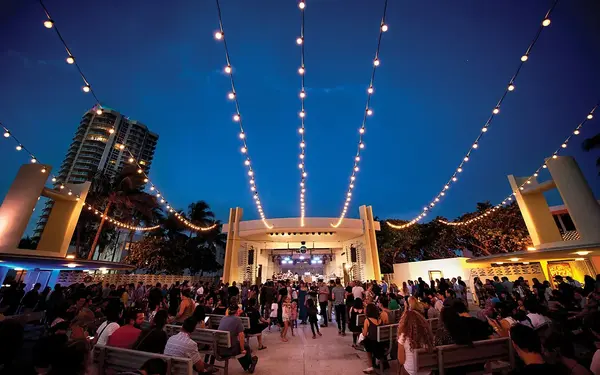
Throughout the year, enjoy Ocean Drive Arts' free Sunday concerts, art fairs, family-friendly events and more at Lummus Park in South Beach.
Art Deco Weekend, hosted by MDPL in January, is an annual free event that celebrates the cultural significance of the architectural style with guided tours, classic cars, films, antiques and activities for children.
History Of Art Deco Architecture In Miami Beach
In the late 1920s, Miami Beach underwent significant rebuilding, and by the 1930s, the city embraced the then-popular Art Deco architectural style. One of the first Art Deco buildings constructed was the Beth Jacob Synagogue at 301 Washington Avenue, which now houses the Jewish Museum of Florida-FIU. But after World War II, many Art Deco hotels and buildings fell into disrepair and faced demolition.
In 1979, thanks to the work of community activist Barbara Baer Capitman, who led an Art Deco preservation movement in the late 1970s and early 1980s and co-founded the Miami Design Preservation League (MDPL), the Art Deco District was listed on the National Register of Historic Places. The nonprofit MDPL remains dedicated to preserving, protecting and promoting the architectural character and historical integrity of the Miami Beach Architectural Historic Districts – home to the largest concentration of Art Deco architecture in the world, with more than 800 preserved historic buildings, some of which represent other architectural styles.
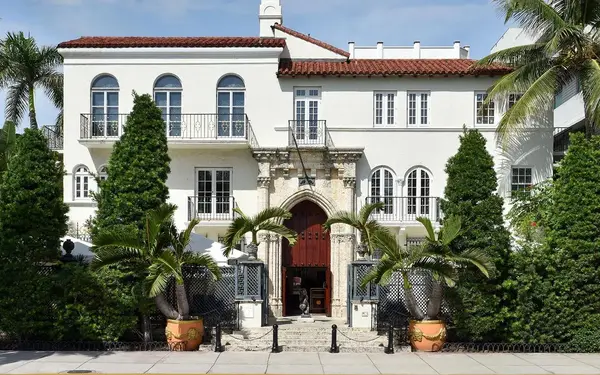
Miami Beach even has its own unique Art Deco style called "Tropical Deco,” which is characterized by nautical designs, pastel colors, floral reliefs and “eyebrows” (a shelf structure placed above a window to provide shade from sunlight, cooling the interior).